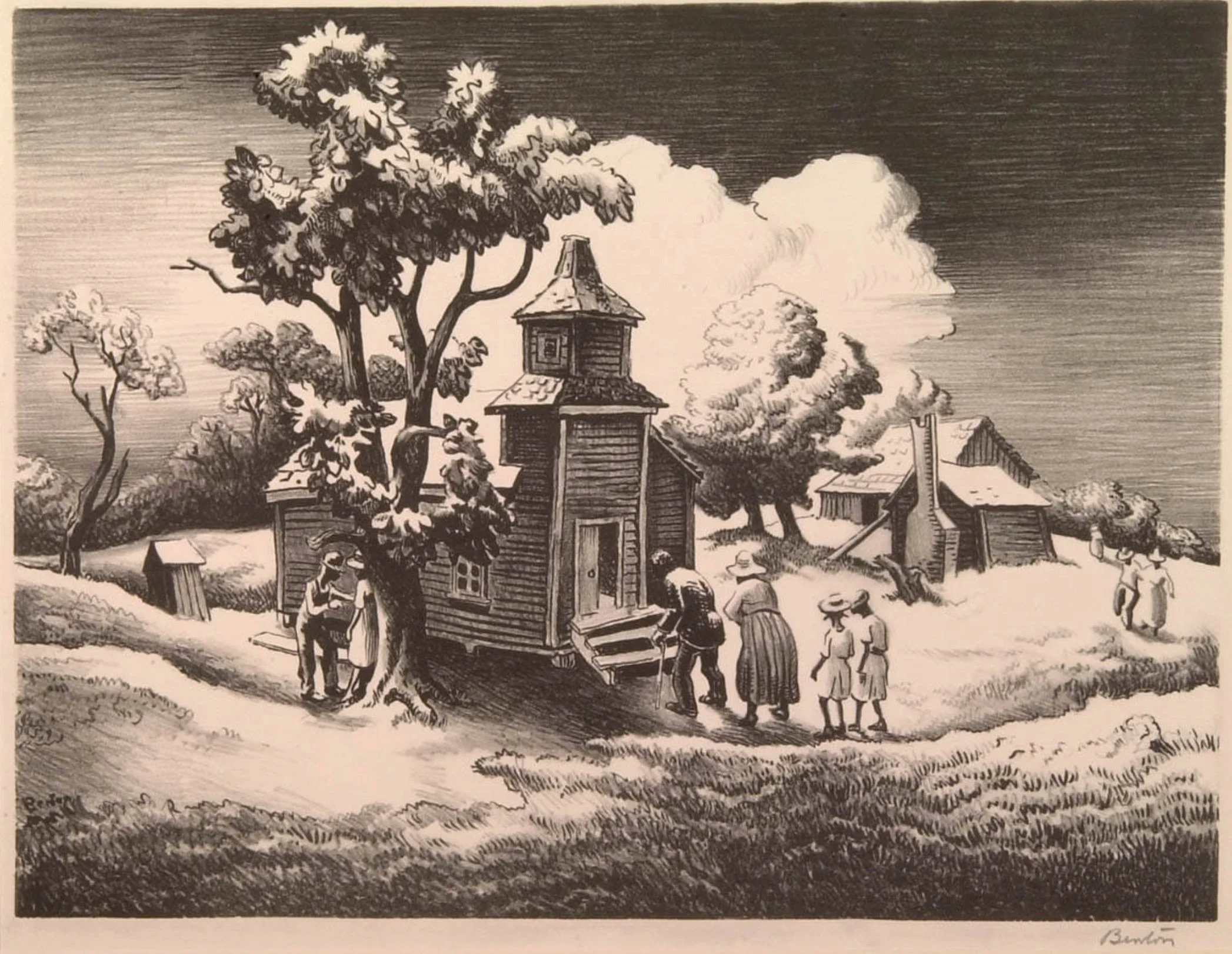
Thomas Hart Benton
Thomas Hart Benton (1889–1975) was a leading figure in American Regionalism, best known for his vivid, dynamic depictions of rural life and working-class communities across the Midwest. Born into a prominent political family, Benton chose a different path—turning away from a life of privilege to immerse himself in the lives and landscapes of everyday Americans.
Benton began formal art training at the School of the Art Institute of Chicago, where he challenged academic expectations and quickly outgrew the traditional curriculum. With support from his instructors, he persuaded his mother to allow him to study in Paris at the Académie Julian, seeking the rigorous artistic training and creative environment he believed necessary for his growth.
Despite time abroad and in New York, Benton remained deeply disillusioned with the art world’s growing embrace of modernism. Instead, he devoted himself to capturing the spirit and stories of the American heartland. Alongside Grant Wood and John Steuart Curry, he helped define the Regionalist movement, which celebrated local culture, history, and labor at a time when many artists were turning toward abstraction.
Benton spent months traveling through small towns and rural areas, connecting with local communities and making thousands of sketches and ink wash drawings based on his observations. These studies would become the foundation for his large-scale murals and iconic paintings—works that vividly narrate American life with empathy, energy, and populist pride.