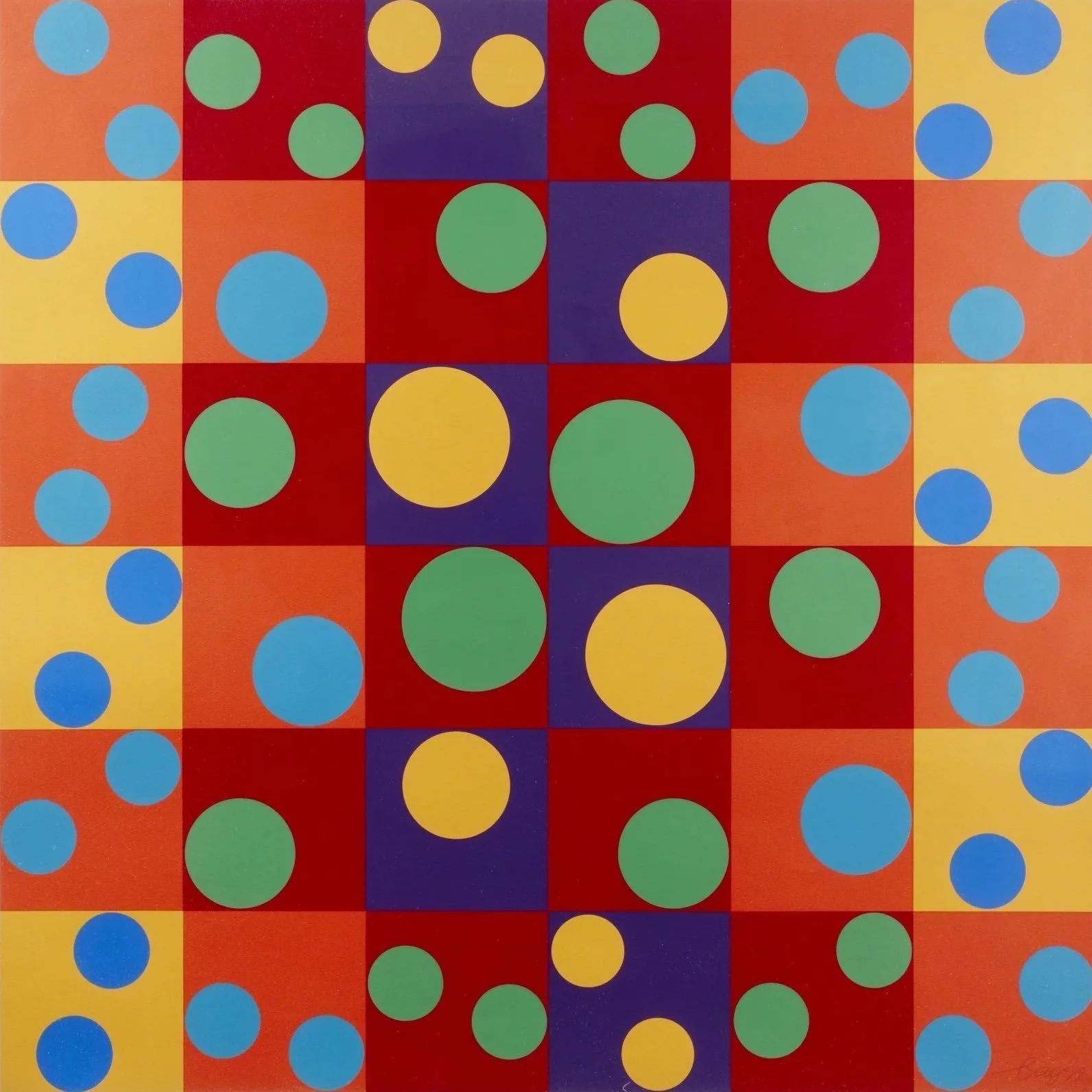
Herbert Bayer
Herbert Bayer (1900–1985) was an influential Austrian-American artist whose multidisciplinary career spanned graphic design, painting, photography, sculpture, architecture, and environmental design. A pivotal figure in 20th-century modernism, Bayer was trained at the Bauhaus from 1921 to 1925 and went on to lead its printing and advertising workshop in Dessau, where he designed many of the school's most iconic publications.
In the 1930s, Bayer turned his focus to photography, developing a distinctive style of photomontage that reflected the surrealist influence of the time, blending dreamlike imagery with layered realities. He emigrated to the United States in 1938 at the invitation of Alfred H. Barr, Jr., founding director of The Museum of Modern Art, to help install the seminal exhibition Bauhaus: 1919–1928 at MoMA. This opportunity marked the beginning of his long and impactful American career.
Bayer collaborated closely with Edward Steichen, head of MoMA’s Department of Photography, and played a key role in designing the groundbreaking exhibition Road to Victory (1942), which helped define a new, emotionally powerful mode of photographic storytelling in museums. He remained in the U.S. for the rest of his life, working as a designer and curator, and further advancing his Bauhaus ideals through numerous projects in advertising, architecture, and environmental design.
Later in his career, Bayer curated two major Bauhaus exhibitions that toured internationally from 1967 to 1971, helping to solidify the movement’s legacy. He was also instrumental in shaping the Atlantic Richfield Company’s corporate art collection, which he directed until his death in 1985.
Bayer's work exemplifies the Bauhaus ethos of unifying art, design, and functionality, and his influence remains deeply embedded in the visual and architectural culture of the modern world.
Herbert Bayer (Austrian-American, 1900-1985), "Birthday Picture", XXXXXXX