
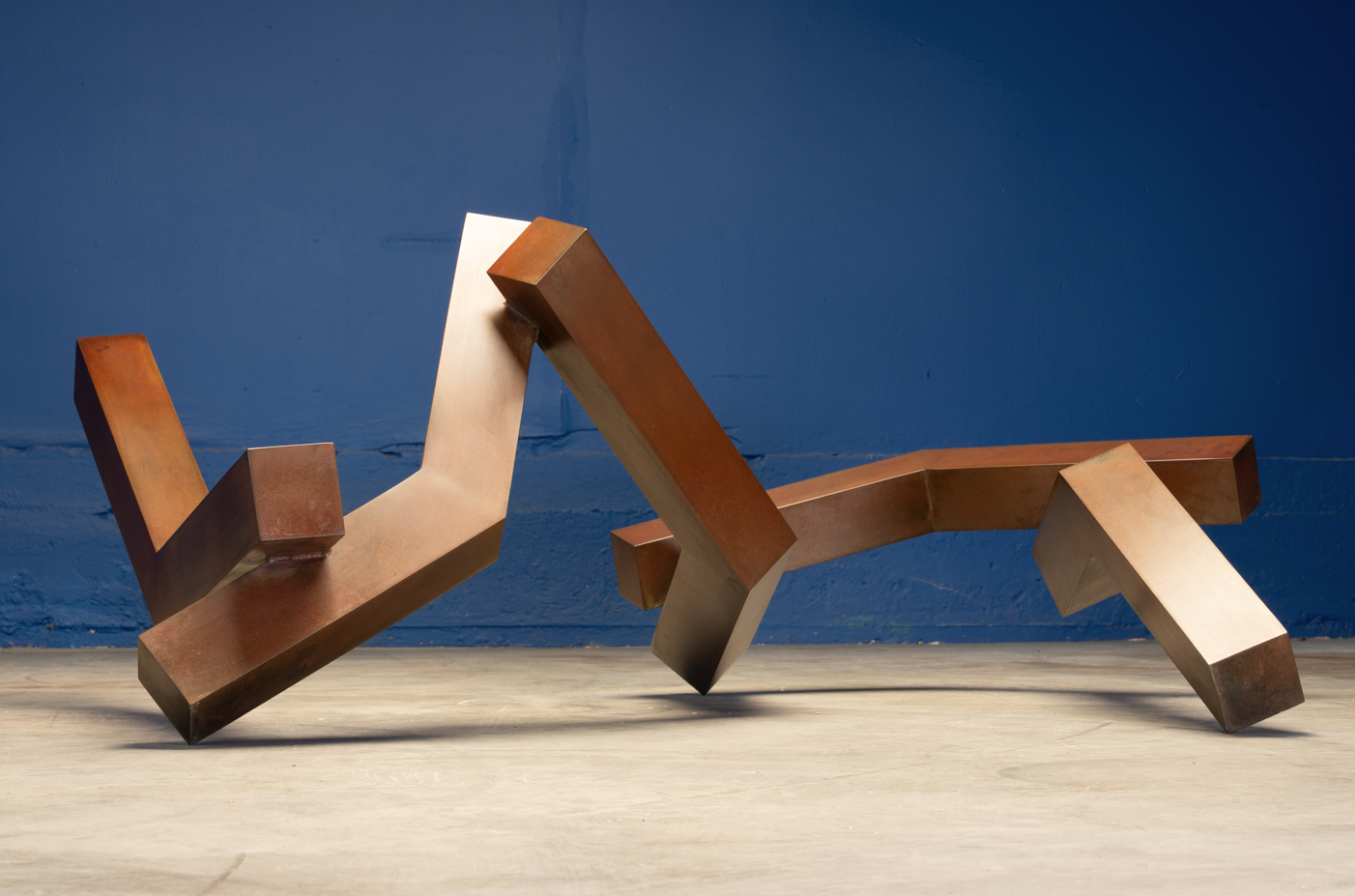
The Circle and the Line
Recent Works by Brian Wall
Brian Wall (British/American 1931) is a sculptor and painter whose career has spanned more than seven decades and two continents. Born in London, England, Wall experienced the hardships of World War II as a child, living through the London Blitz before being evacuated to Yorkshire. After returning to London, he left school as a teenager to work as a glassblower and later served in the Royal Air Force as an aerial photographer. In the early 1950s, he began pursuing a career as an artist. In 1954, Wall moved to St. Ives, Cornwall, a center for postwar British abstraction. There he worked as an assistant to the renowned sculptor Barbara Hepworth from 1955 to 1960, an experience that greatly influenced his artistic development. During this period, he created painted wood reliefs and, beginning in 1956, some of the earliest abstract welded steel sculptures produced in England.
Wall quickly emerged as a leading figure in postwar British sculpture. His first solo exhibition was held in London in 1957, and throughout the 1960s he participated in major exhibitions, including British Sculpture in the Sixties at the Tate Gallery. His large-scale public commissions and innovative use of steel established him as a prominent voice in the influential “New Generation” of British sculptors. In 1969, Wall was invited to teach at the University of California, Berkeley. He joined the faculty permanently in 1972, later serving as Chair of the Art Department before retiring in 1994. Becoming a U.S. citizen in 1982, Wall continued to exhibit extensively in both Britain and the United States. His work has been the subject of numerous solo exhibitions and retrospectives, earning recognition for its lyrical balance of geometric structure, movement, and abstraction.
Brian Wall has lived and worked in the San Francisco Bay Area since 1972, where he continues to design and fabricate welded steel sculpture by hand. Working independently in his studio, Wall creates one-of-a-kind artworks that range from intimate tabletop works to large-scale outdoor installations. Across his career, he has explored steel as both structure and gesture, often finishing surfaces with wax, varnish, or paint to emphasize material presence and light.
Since 2007, Wall has worked primarily in stainless steel, developing two related bodies of work that distill his visual language into elemental forms. In the Squaring the Circle series, curved segments of the circle are joined and interrupted, creating shifting spatial tensions between balance and disruption. In the more recent Crossing the Line series, angular, linear components introduce a sharper structural rhythm, extending his ongoing dialogue between geometry, movement, and space. Alongside his sculpture, Wall has maintained a parallel practice in drawing and printmaking. Using charcoal, ink, oil pastel, and, more recently, oil pigment sticks, he builds compositions from a restrained vocabulary of geometric forms. These works often function as spaces of experimentation, where improvisation and control remain in productive tension.
Critics have long noted Wall’s ability to animate simple forms with energy and clarity. As Peter Selz observed, his circles and arcs become “thrusts of energy,” while George Neubert described his sculptures as possessing a “dramatic equilibrium of poise and movement.” Together, these observations reflect a practice defined by its balance of precision and vitality—where line, curve, and structure become tools for shaping space itself.
The Circle and the Line: Recent Works by Brian Wall is on view August 13 – December 6, 2026. Admission to the Ellen Noël Art Museum is always free.
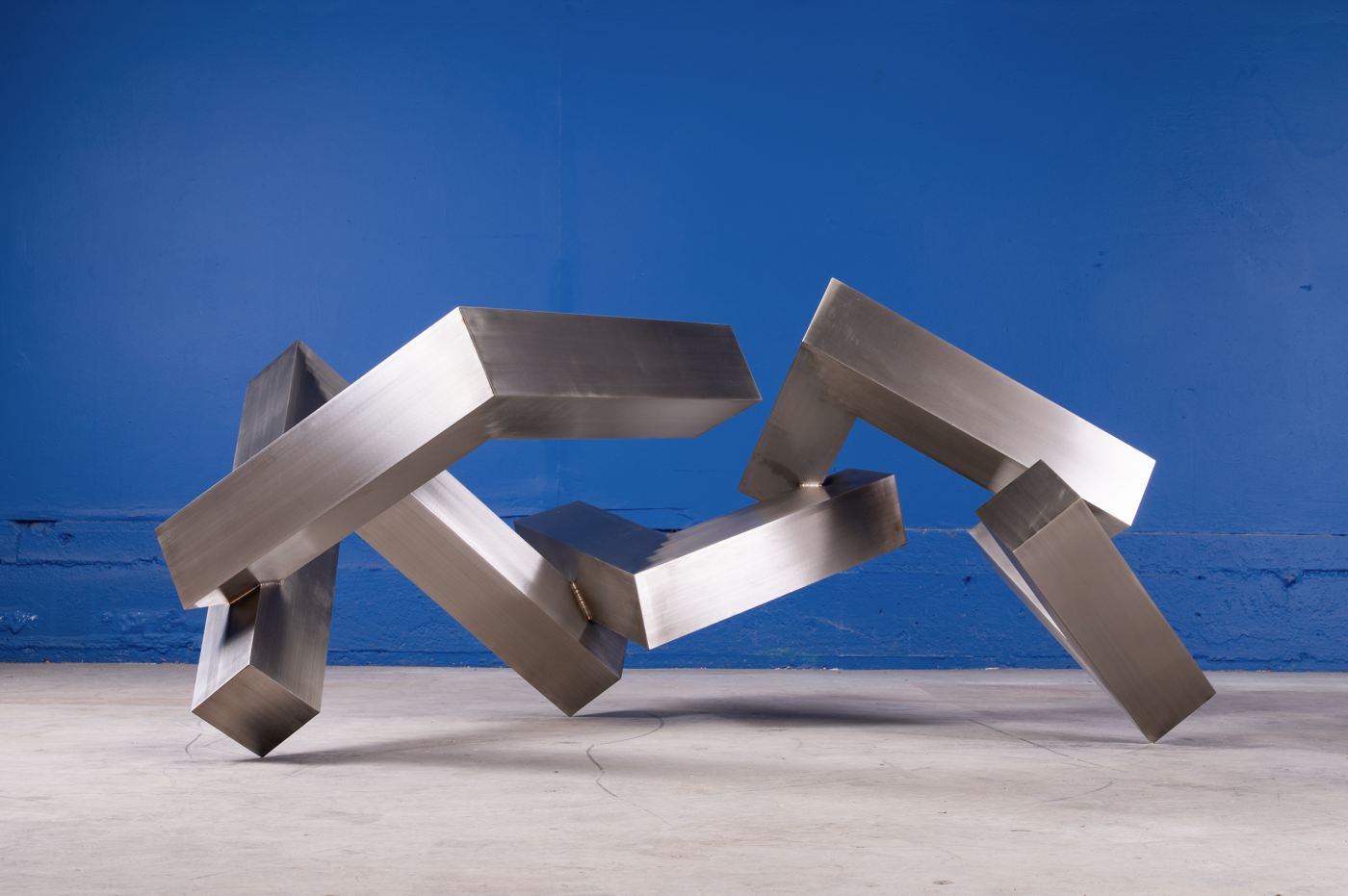
Brian Wall, Grey’s Elegy, 2024, 63” x 52” x 29”, stainless steel. Photo: Pat Mazzera. ©Brian Wall.
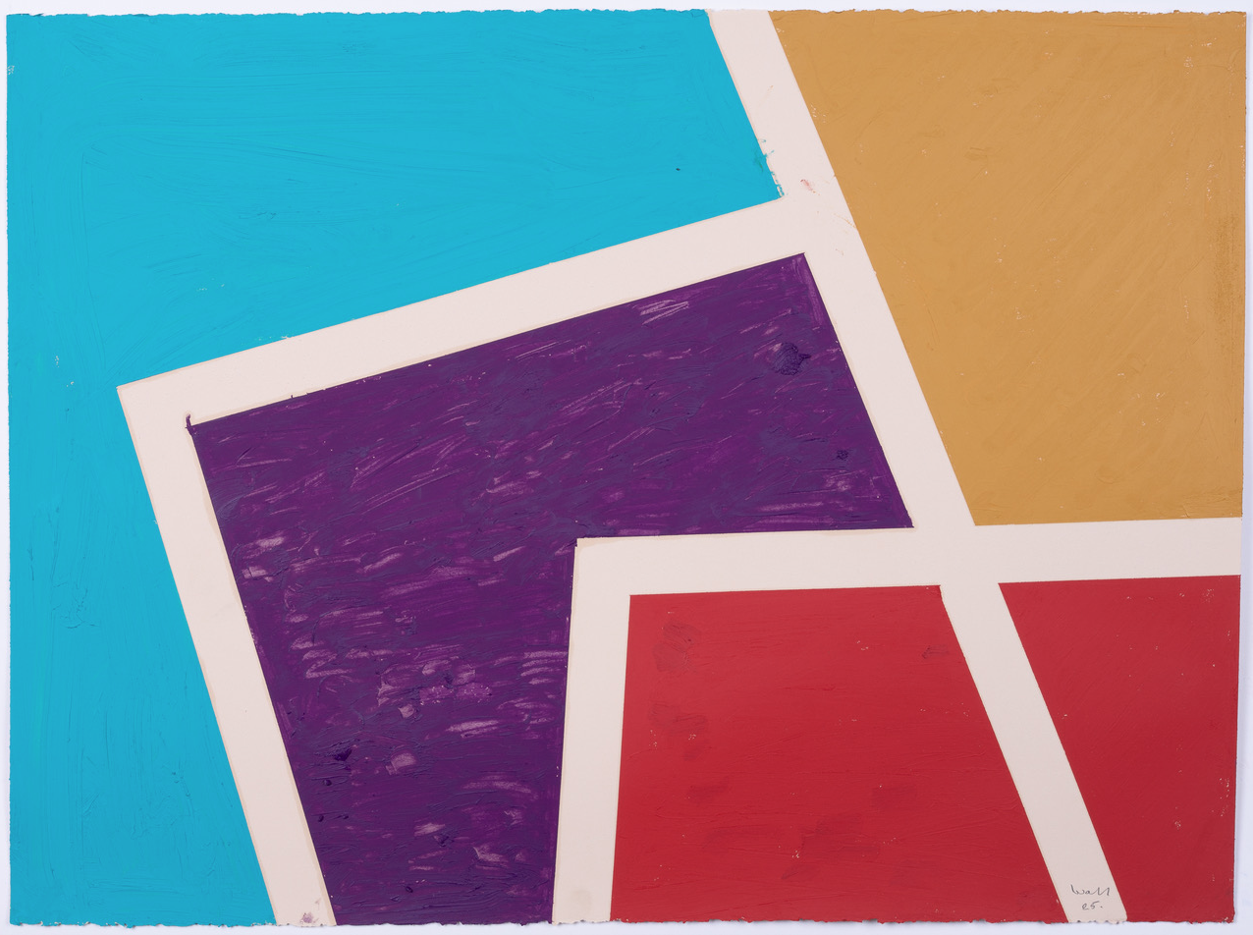
Brian Wall, Drawing in Color 227, 2025, 30” x 22”, oil pigment on paper. Photo: Pat Mazzera. ©Brian Wall.
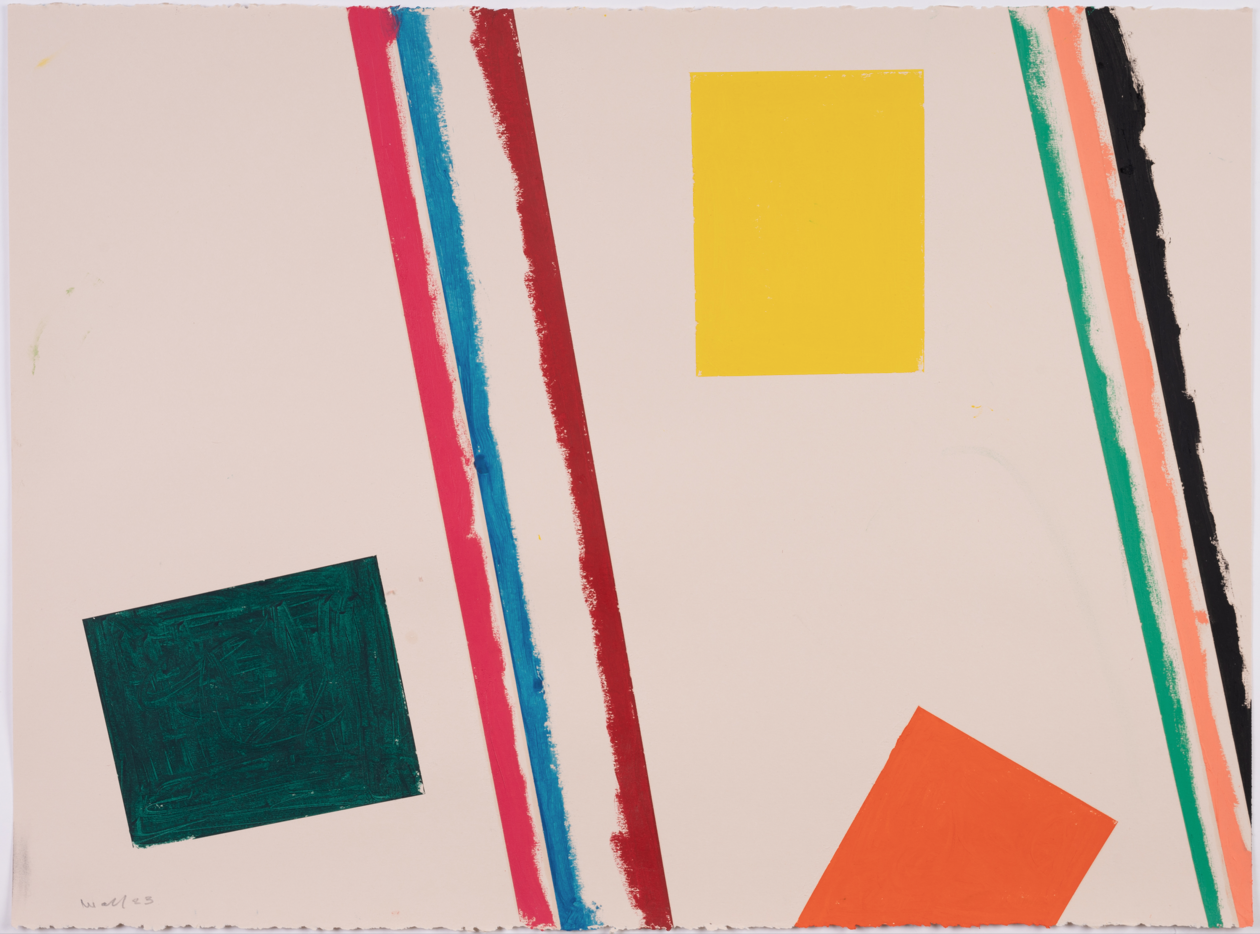
Brian Wall, Drawing in Color 77, 2023, 30” x 22”, oil pigment on Stonehenge paper. Photo: Pat Mazzera. ©Brian Wall.
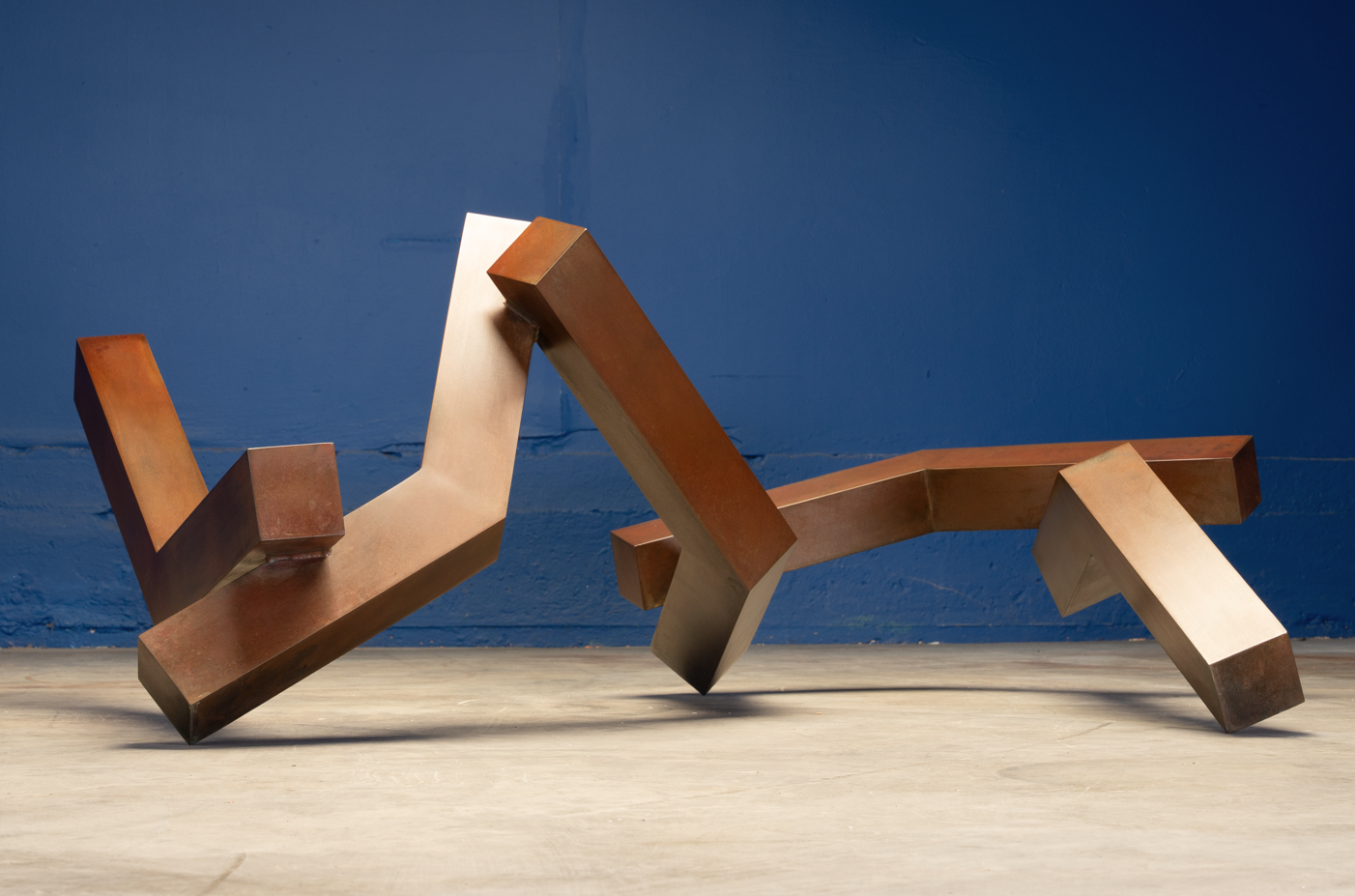
Brian Wall, Caramel, 2025, 51” x 40” x 19.5” h, bronze. Photo: Pat Mazzera. ©Brian Wall.